Soon vs Deputy for Shift Scheduling
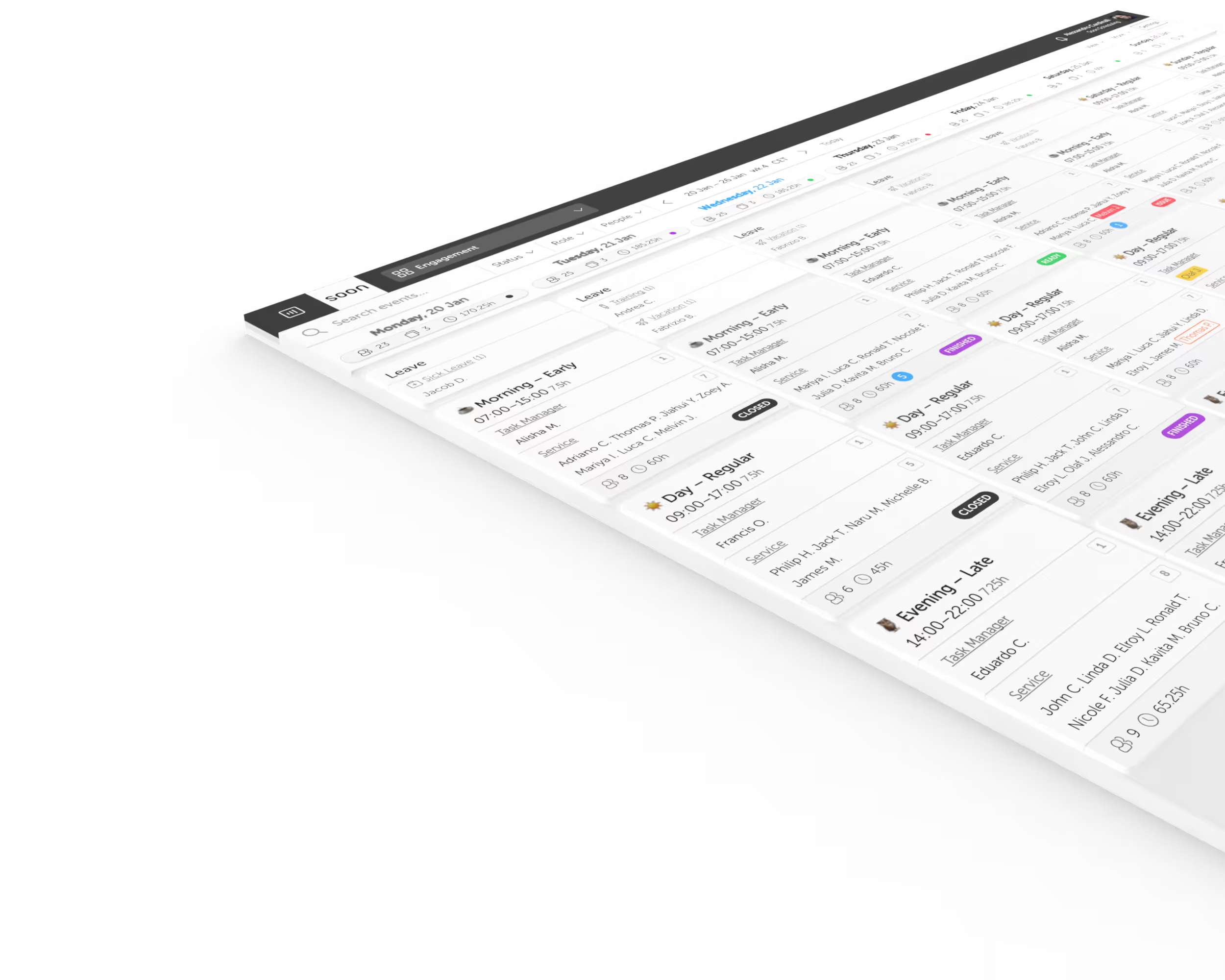
Deputy is strong when scheduling and time tracking need to stay tightly connected. Soon is stronger when teams need deeper automation, planning within shifts, and operational visibility without treating scheduling as an add-on to time clocks.
| Feature | Soon | Deputy |
|---|---|---|
| Auto-scheduling depth | Rule-based AI auto-fill with constraints | Auto-scheduling with labor rules |
| Planning within shifts | Plan activities and coverage inside each shift | Shift assignment focused |
| Intraday changes | Real-time updates with AI assistant support | Schedule edits with labor guardrails |
| Forecasting | Demand-based staffing forecasts | Labor demand tools in higher tiers |
| Employee self-service | Swaps, availability, leave, open shifts | Swaps, availability, time-off |
| Time tracking integration | Export-ready, growing integrations | Native time and attendance |
| Compliance and labor rules | Built-in rule enforcement | Strong break and overtime controls |
| Setup effort | Live in under a day for most teams | Moderate setup for rules and locations |
| AI scheduling assistant | Natural-language intraday scheduling | Limited AI scheduling features |
| Best fit | Growing ops teams needing planning depth | Hourly teams with tight labor controls |
How does calendar sync compare?
Calendar support can mean a one-way subscription, a native integration, or real two-way updates. Compare how shift schedulers connect with Google Calendar and Outlook before you assume every sync works the same way.
Compare calendar sync methods →The verdict
Choose Soon if you need stronger scheduling automation, planning within shifts, and clearer coverage visibility. Choose Deputy if time tracking, break rules, and labor compliance need to stay as close to scheduling as possible in one hourly-team workflow.
Try Soon FreeFrequently asked questions
Is Soon or Deputy better for shift scheduling?
Soon is better when scheduling complexity goes beyond assigning shifts, especially if you need automation, forecasting, and visibility into what happens during the day. Deputy is better when labor compliance and time tracking matter as much as the schedule itself.
Does Deputy have auto-scheduling like Soon?
Deputy offers auto-scheduling with labor rules and constraints. Soon goes further on rule-based auto-fill, planning within shifts, and AI-assisted intraday changes for teams that need more operational control after shifts are published.
Can I migrate from Deputy to Soon?
Yes. Export employee and schedule data from Deputy, then import into Soon via CSV. Most teams complete migration in one to two business days. Soon also offers free migration help for teams switching from another scheduler.
How does pricing compare between Soon and Deputy?
Both use per-user pricing. Deputy is often evaluated on labor controls plus time tracking value. Soon is best evaluated on scheduling depth, automation, and time saved after the schedule is live. Check each vendor's current pricing page for up-to-date numbers.
Which tool is better for contact centers or operations teams?
Deputy fits hourly teams that want scheduling tied closely to attendance. Soon fits operations teams that need stronger planning within shifts, forecasting, and intraday visibility without moving into enterprise WFM.
Does Soon include time tracking?
Soon focuses on scheduling, leave, forecasting, and intraday workforce visibility. If native time clocks are the primary buying driver, Deputy may be the better fit. Many teams pair Soon with existing payroll or time systems.
More comparisons
Need the wider field? Read our guides to the best employee scheduling software and best AI shift scheduling software.
How does the switching process work?
Switch from Deputy to Soon with confidence.
There are multiple ways to move from Deputy to Soon. You can transition at your own pace, or reach out so we can help with your migration.
- 01
Create your Soon workspace
Sign up and create your first team. It takes less than two minutes and no credit card is needed.
- 02
Import your team
Add your employees manually or import them from a CSV file. Set roles, skills, and contract hours.
- 03
Set your scheduling rules
Define shift templates, coverage requirements, rest period rules, and any constraints your team needs.
- 04
Run a pilot alongside your current tool(optional)
Most teams run a 1 to 2 week pilot with one team before rolling out to the full organization.
- 05
Go live
Publish your first schedule and invite your team. Our support team is available if you need help along the way.
Your next schedule could take 2 minutes.
Import your team, set your rules, hit auto-fill. Most teams are live the same day.
30 days free · No credit card required
Already have an account?Sign in